Vliegtuigregistraties uitgelegd: hoe lees je het kenteken op de staart
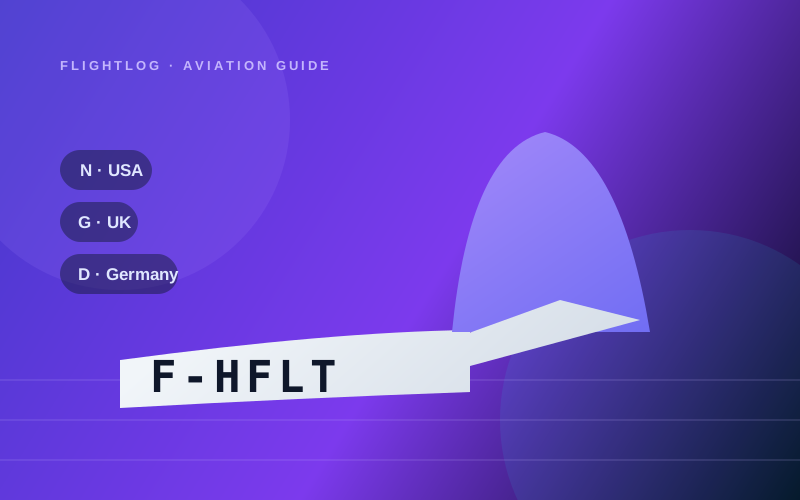
Look closely at the tail or rear fuselage of any aircraft and you will find a short string of letters and numbers painted in large characters, something like N628AA, G-XWBA, or F-HTYA. That is the aircraft's registration, its permanent legal identity. Unlike a flight number, which changes every day, the registration belongs to one specific airframe for its entire life. Learn to read it and you can tell where a plane is from, look up its exact history, and even recognise the very same jet on a future trip.
Registration vs. Flight Number
These two are constantly confused, so it is worth being precise. The flight number (for example AF006) is a commercial label: it describes a route and a schedule, and a different physical aircraft may operate it tomorrow. The registration (for example F-HPJD) identifies the metal itself. One airframe keeps its registration whether it is flying passengers, sitting in maintenance, or being repainted for a new airline. Think of the flight number as a job title and the registration as a passport.
Reading the Country Prefix
Every registration begins with a country prefix assigned by the International Civil Aviation Organization (ICAO). The first one or two characters tell you where the aircraft is registered, which is not always where the airline is based. Here are some of the most common prefixes:
| Prefix | Country | Example |
|---|---|---|
| N | United States | N628AA |
| G- | United Kingdom | G-XWBA |
| F- | France | F-HTYA |
| D- | Germany | D-AIMA |
| JA | Japan | JA873A |
| VH- | Australia | VH-OQA |
| B- | China / Taiwan / HK | B-2032 |
| A6- | United Arab Emirates | A6-EDA |
The United States is the easy one to spot: every US registration starts with N, which is why spotters call them "N-numbers". Most other countries use a dash after the prefix, then a block of letters or numbers unique to that airframe.
The Hidden Code: ICAO 24-bit Hex
Beyond the painted registration, every aircraft also broadcasts an invisible identifier: a unique 24-bit ICAO address, written as a six-character hexadecimal code like 3C6444. This is what its ADS-B transponder transmits to the world many times per second, and it is how live tracking services know which dot on the map is which plane. The hex code maps directly back to the registration, so given one you can find the other.
How to Find Your Aircraft's Registration
On board, the registration is often printed on a small placard near the boarding door, etched on the safety card, or visible on the engine cowling and tail through your window. Before you fly, tracking sites list the expected airframe for a given flight number. And once you have it, that short code unlocks a surprising amount of history: the aircraft's age, the date of its first flight, its manufacturer serial number (MSN), previous operators, and even photographs of the exact plane.
Why Plane Spotters Chase Tail Numbers
For aviation enthusiasts, the registration turns flying into a collection game. Spotting a rare airframe, catching a brand-new delivery, or unexpectedly boarding the same individual aircraft you flew years ago is a genuine thrill. Some registrations become famous: VH-OQA was the first Qantas A380, and many airlines hand-pick vanity tails that spell out words. Logging the registration of every flight builds a personal record far richer than just "I flew from A to B".
Log Every Tail Number with FlightLog
This is exactly where FlightLog shines for the aviation-minded traveler. Add the registration to any flight and the app pulls up a full Aircraft Info Card: manufacturer and exact model, engines, age, MSN, cabin configuration, and a photo of that specific airframe. Its real-time plane tracker lets you follow any aircraft by its registration, and dedicated achievements like "Tail Number Hunter" reward you for building your collection.
Start decoding the planes you fly, and keep a permanent record of every one. You can download FlightLog for free on iOS and Android and add your first tail number today.
Klaar om je vluchten bij te houden?
Download FlightLog gratis en ontdek al deze functies op je eigen vluchten.